
FP&A Careers
FP&A often goes by different names in different companies and countries, but it always has the same goal: optimize the use of capital and resources by supporting business decisions.
Build a rewarding career in financial planning & analysis (FP&A) by mastering the skills to shape strategic decision-making in today's top organizations.
FP&A is one of the fastest-growing fields in finance. The U.S. Bureau of Labor Statistics projects that financial analyst roles will grow 6% over the next decade, faster than average, reflecting the increasing demand for strategic finance professionals who can turn data into actionable business insights.
FP&A professionals drive strategic decisions across organizations through financial analysis, financial modeling, integrated planning, forecasting, budgeting and performance management. Unlike traditional accounting roles focused on historical record-keeping, FP&A jobs are forward-looking, helping leadership allocate resources, evaluate investments and plan for growth. This strategic impact makes FP&A careers rewarding.
FP&A offers professionals a clear path from entry-level analyst roles to senior leadership positions. Many CFOs come from FP&A backgrounds, as the role provides comprehensive exposure to business operations, strategic planning, and executive decision-making. Read FP&A success stories to see how professionals have advanced their careers through FP&A roles.
What Is FP&A?
Financial planning and analysis (FP&A) is the corporate finance function responsible for integrated planning, budgeting, forecasting, performance management and financial analysis to support strategic decision-making.
FP&A professionals analyze financial data, build models and provide recommendations that help executives make informed business decisions. Key FP&A responsibilities include facilitating the budgeting process, developing financial forecasts, conducting scenario analyses, tracking performance against goals, and identifying opportunities for growth or cost optimization. FP&A teams work closely with business unit leaders across the organization, translating financial data into actionable insights that drive strategy.
The strategic importance of FP&A has grown significantly as businesses become more data-driven. Companies are struggling to find qualified FP&A candidates who can build dynamic financial models, conduct scenario planning and provide forward-looking guidance that supports strategic decision-making. This makes FP&A analyst positions and senior FP&A roles increasingly valuable to organizations. Learn more about Financial Planning and analysis (FP&A).
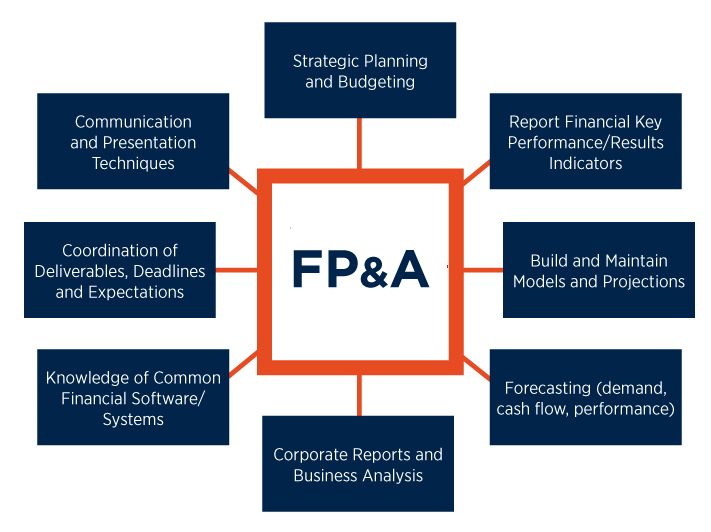
Education & Skills Needed for FP&A Roles
Most FP&A analyst jobs require a bachelor's degree in finance, accounting, economics or business.
While an MBA is helpful for advancing to senior roles, it's not required for entry-level FP&A positions.
Technical Skills for FP&A Jobs
- Advanced Excel proficiency
- Financial modeling and forecasting
- Budgeting and variance analysis
- Financial reporting and data visualization tools
- ERP systems and business intelligence software
Soft Skills for FP&A Jobs
- Strong communication and presentation abilities
- Business partnering and stakeholder management
- Analytical thinking and problem-solving
- Strategic planning capabilities
FP&A Professional Certifications
The Certified Corporate FP&A Professional (FPAC) certification is specifically designed for FP&A professionals and validates the core competencies needed to excel in FP&A analyst positions and beyond. The FPAC is the only certification built by FP&A professionals, for FP&A professionals. The credential demonstrates expertise in financial modeling, forecasting, budgeting, performance management and business partnering, which are the exact skills required for success in FP&A roles. Learn the Benefits of FPAC certification.
Other certifications for FP&A careers include the CPA designation and the CFA credential. While the CPA provides a strong accounting foundation and the CFA offers investment analysis fundamentals, the FPAC is purpose-built for the FP&A career path and directly aligns with the responsibilities of FP&A professionals.
FP&A Career Path & Salary Outlook
The FP&A career ladder offers clear progression with increasing responsibilities and compensation at each level. While some FP&A professionals follow a straightforward upward career path, others choose to include horizontal movement to add skills and experience in other corporate finance or business functions.
-(1).png?sfvrsn=e3e7e66b_0 "FP&A Career Path")
Common FP&A Career Paths
Some professionals complete FP&A internships before moving into a full-time FP&A role, while others transition into FP&A from accounting, operations or another corporate finance function.
Below is an example of a traditional career progression for FP&A jobs in the U.S., based on information from the 2025 AFP Compensation and Benefits Survey Report.
It’s important to note that salaries depend on industry, location and company size. FP&A professionals in major cities and at larger organizations typically command higher compensation.
FP&A Analyst
Experience Level: 2-4 years
Salary Range: $74,000 - $98,500
Entry-level FP&A analyst jobs focus on analyzing data to address business issues and improve financial performance. Analysts build financial models, prepare budgets, conduct variance analyses and support senior team members. This role develops the technical foundation needed for advancement in FP&A careers.
Senior FP&A Analyst
Experience Level: 5-7 years
Salary Range: $90,000 - $120,000
Senior FP&A analysts are responsible for driving timely financial planning, analysis and decision support across the organization. Their focus is on the strategic plan, budgeting, monthly forecasting and consolidated financial reporting.
FP&A Manager
Experience Level: 7-10 years
Salary Range: $120,000 - $150,667
FP&A managers manage budgeting and forecasting cycles, manage a team of analysts, and collaborate with business units to identify financial opportunities and risks. They balance people management with hands-on financial analysis and present forecasts to senior leadership.
FP&A Director
Experience Level: 10-15 years
Salary Range: $151,500 - $203,750
FP&A directors lead financial planning, forecasting, budgeting and strategic analysis. They provide data-driven insights to senior leadership, enabling effective decision-making and supporting the company's strategic objectives.
Vice President, FP&A
Experience Level: 10-15+ years
Salary Range: $185,000 - $262,000
Vice presidents of FP&A take ownership over financial planning, management reporting and financial analytics. They oversee the company’s financial strategy, planning and operations, and provide senior and executive leadership with financial reporting and analysis for strategic and tactical decision-making.
Chief Financial Officer (CFO)
Experience Level: 10-15+ years
Salary Range: $207,750+ (highly variable by company size)
Many CFOs have FP&A backgrounds. The strategic planning, financial analysis and business partnering skills developed in FP&A roles provide excellent preparation for the CFO position. FP&A experience offers comprehensive exposure to business operations and executive decision-making that's essential for finance leadership.
FP&A Job Outlook
The demand for skilled FP&A talent is high. Finding qualified candidates is the top talent management issue faced by organizations, according to the 2025 Compensation and Benefits Survey. Yet, as Robert Half’s 2025 Finance and Accounting Job Market Outlook shows, the most evident skills gap that finance and accounting leaders are seeing is in the area of finance and FP&A.
FP&A professionals looking to validate their expertise and stand out in a competitive job market get the Certified Corporate FP&A Professional (FPAC) credential. FP&A managers and directors with the FPAC certification earned an average of 5% more in base salary than their non-certified peers in 2024, according to the 2025 AFP Compensation and Benefits Survey.
Learn more in our article: Are certified professionals more likely to get hired?
FPAC Certification & Career Advancement
The Certified Corporate FP&A Professional (FPAC) is the premier certification for financial planning and analysis professionals. Established by the Association for Financial Professionals (AFP), the FPAC validates expertise in financial modeling, forecasting, budgeting, performance management and business partnering through a rigorous two-part exam and experience requirements.
Benefits of FPAC Certification:
- Enhanced credibility with employers
- Skill validation in core FP&A competencies
- Higher earning potential (FP&A managers and directors with FPAC certification earned an average of 5% more in base salary than their non-certified peers in 2024)
- Better promotion prospects
- Connection to a global network of FP&A professionals
The FPAC credential demonstrates your commitment to the FP&A profession and sets you apart in competitive job markets. Learn more about the FPAC certification and explore FPAC exam prep courses and resources.
Do FP&A Careers Have Good Salaries Compared to Other Finance Roles?
Yes, FP&A professionals earn competitive salaries within the finance field, with strong earning potential as they advance from FP&A analyst roles to senior leadership positions.
FP&A Salary Ranges by Role (U.S.):
- FP&A Analyst: $74,000 - $98,500
- Senior FP&A Analyst: $90,000 - $120,000
- FP&A Manager: $120,000 - $150,667
- FP&A Director: $151,500 - $203,750
- VP of FP&A: $185,000 - $262,000
FP&A salaries depend on industry, location and company size. Professionals working in major cities often earn toward the higher end of these ranges. Larger organizations typically offer higher compensation than smaller companies.
FP&A roles offer competitive compensation compared to other finance positions because of the strategic value FP&A professionals provide to organizations. The most evident skills gap on finance and accounting teams is within finance and FP&A, driving strong demand and competitive salaries for qualified professionals.
Professional certifications like the FPAC can boost earning potential throughout your career. The credential validates your expertise and demonstrates commitment to the FP&A profession, leading to better compensation and advancement opportunities.
Is FP&A a Good Career?
FP&A is an excellent career path for analytical thinkers who want strategic influence in business. The field offers high growth potential, competitive salaries and the opportunity to directly impact organizational success.
Why FP&A Is a Rewarding Career:
- Strategic Impact: FP&A professionals are trusted advisors to leadership, driving decisions that shape company direction.
- Career Growth: FP&A provides progression from analyst to CFO, with increasing responsibility and compensation at each level.
- Job Security: FP&A positions are considered relatively stable, even during economic downturns, because of the strategic importance of the work.
- Diverse Opportunities: FP&A skills are transferable across industries and company sizes.
- Competitive Compensation: FP&A roles have strong earning potential with six-figure salaries common at senior levels.
FP&A careers are ideal for professionals who enjoy financial modeling, data analysis and business strategy. If you're interested in roles that combine technical finance skills with strategic thinking and business partnering, FP&A offers an excellent career path.
Ready to advance your FP&A career?
- The FPAC Exam: Quick-Look
- Prepare for the FPAC exam with FP&A courses
- Join AFP to access member benefits
- Attend the AFP Finance Conference
- Attend the AFP FP&A Forum Finance Event
Whether you're exploring financial analyst entry-level jobs or looking to advance to senior FP&A roles, the field offers clear pathways for professional growth and career success.
 Download the
FP&A Handbook and dive deep into all things Financial Planning and Analysis including:
- Defining FP&A
- Day in the Life
- Characteristics of Leaders
- Career Paths