Is FP&A Certification Worth It?
If you are building a career in financial planning and analysis, the Certified Corporate FP&A Professional (FPAC) credential can be a valuable investment. It offers a structured approach to building your FP&A knowledge and showcasing your skills to employers.The FPAC was developed specifically around the work performed by corporate FP&A professionals. The exam covers business and finance, systems and technology, business partnering, analysis and projections, models and analytics, and business communication.
More than 600 practitioners participated in validating the job tasks and responsibilities used to develop the examination.
There are also measurable indicators of its career value:
8% Higher Average Base Salary
Managers in FP&A with an FPAC report an average base salary 8% higher than non-holders, a difference of $10,315.*
96% More Likely to Hire
96% of finance executives say they are more likely to hire a certified candidate over someone without a certification.
Nearly 90% See Career Value
Almost 90% of FPAC credential holders surveyed say the certification is valuable to their career.
96% Say the Preparation is Relevant
96% of FPAC credential holders say the FPAC preparation materials are relevant to their jobs.
*Salary figures compare reported averages for FPAC credential holders and non-holders. Certification is one of many factors that may affect compensation.
So, Is the FPAC Worth It?
For professionals who plan to build their careers in FP&A, the FPAC can be worth the investment because it provides independent validation of FP&A knowledge and requires candidates to demonstrate their understanding through a rigorous examination.
FPAC holders report benefits from the preparation process itself. AFP research found that almost 90% see the certification as valuable to their career. Credential holders cite adding knowledge and skills, receiving a salary increase, transitioning into an FP&A role and differentiating themselves from other finance professionals among the benefits.
The experiences of FPAC professionals provide additional context on where that value can show up during a career.
Does FPAC Help Your Career?
A certification cannot guarantee a promotion or a new job. FPAC holders have reported specific instances where the credential and the skills they developed played a role in career opportunities.
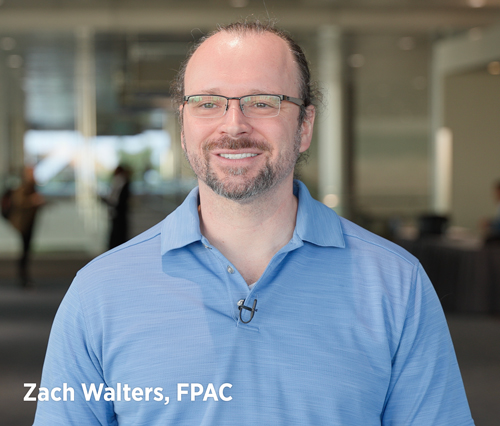
Zach Walters earned his FPAC while working at Thermo Fisher Scientific. When a position opened on a highly regarded business transformation team, a former colleague who knew Zach had recently earned the credential approached him about joining the group. Zach accepted the position and says that role changed the direction of his career.
The FPAC knowledge also became useful once he was in the role. Zach worked on major capital and restructuring projects, including projects valued around $150 million. He applied model-building competencies from FPAC to clarify assumptions and show leaders how changing those assumptions affected project outcomes. He says the approach helped with projects where leadership decisions had previously stalled.
 Natalie Morrison had a different experience. She earned FPAC while working as a financial analyst and says the credential provided external validation of her FP&A knowledge. While she was out on maternity leave, she was promoted to senior financial analyst. Natalie says earning the FPAC played a critical role in that promotion. She later earned her CTP, took on investment responsibilities and advanced into management.
Individual career outcomes will vary. These examples show how professionals have used the credential and its underlying competencies as part of their career development.
Do Employers Value FPAC Certification?

AFP reports that 96% of finance executives say they are more likely to hire a certified candidate over someone without a certification.
FPAC hiring managers provide additional perspective.
Justin Kuzma, Senior Director of FP&A at United States Steel, says FPAC certification is listed as a preference on job postings for positions in his area. He looks for the credential because he believes it signals that candidates have developed capabilities relevant to succeeding in FP&A.
Zach Walters also considers FPAC when hiring. He says candidates with the credential receive preferred status from him and that FPAC stands out on a resume. He still evaluates whether the candidate can apply what they have learned in actual business situations.
That distinction is important. FPAC can strengthen a candidate's qualifications. Employers will continue to evaluate experience, performance and the ability to apply FP&A knowledge.
Will I Use What I Learn in FPAC?
The FPAC exam is based on a job analysis of the responsibilities performed by FP&A professionals. Practicing FPAC holders participate throughout the exam-development process, and more than 600 practitioners validated the job responsibilities used to develop the examination specifications.
The current exam covers:
- Concepts of Business and Finance
- Systems and Technology
- Business Partnering
- Analysis and Projections
- Models and Analytics
- Business Communication
Those domains include budgeting, rolling forecasts, financial statement projections, scenario analysis, capital investment analysis, data modeling, process automation, stakeholder engagement and communicating assumptions and conclusions.
Justin Kuzma provides one example of applying that knowledge. When his organization revamped its forecasting process, he used his FPAC background to develop a new forecasting cadence that incorporated different levels of detail for executives and operating teams.
Zach Walters used FPAC model-building competencies during business transformation projects to make assumptions more visible to leadership and show how those assumptions affected projected outcomes.
AFP's research is consistent with those experiences: 96% of FPAC credential holders say the preparation materials are relevant to their jobs.
Is FPAC Valuable If I Already Work in FP&A?
Yes. FPAC is pursued by professionals at different stages of their FP&A careers.
For experienced professionals, the preparation process can help identify gaps in knowledge and reinforce areas they already use on the job.
Alicia Arnold had been working in FP&A for years when she began looking for a structured way to expand her knowledge. She considered an MBA and decided it was not the right next step for her. She chose FPAC because she could combine structured study with the experience she had already developed while continuing to manage her existing job responsibilities.
After earning the credential, Alicia completed a leadership program within her organization and introduced FPAC to members of her leadership team. She says the experience created additional opportunities for her to continue developing professionally.
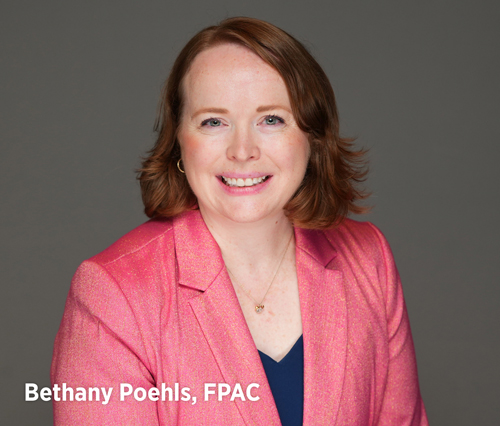
Bethany Poehls also describes certification as useful for experienced practitioners. She says FPAC provides a clear way to communicate that you possess FP&A knowledge you may already be using in your role.
Is FPAC Useful If I Am Moving From Accounting Into FP&A?
Several FPAC professionals in AFP's practitioner interviews came to FP&A from accounting backgrounds.
Bethany Poehls was an accounting manager when her organization combined accounting and FP&A responsibilities. Her CFO asked the FP&A leaders to take the FPAC exam because he wanted a baseline level of FP&A knowledge across the finance leadership team.
Bethany says the certification gave her more confidence in her FP&A abilities and increased the confidence colleagues had in her as an FP&A leader.
Kevin Christensen also began his career in accounting before moving into finance. He pursued FPAC because he wanted to demonstrate to his executive team that he had the skill set required to help develop his company's financial planning and analysis capabilities.
Zach Walters studied accounting as an undergraduate and later moved into finance. He was drawn to FPAC because its curriculum covered areas that aligned more closely with the work he wanted to do, including model building and working with business leaders.
For professionals making this transition, FPAC provides a defined body of FP&A knowledge to study and a formal way to demonstrate proficiency.
Can FPAC Skills Transfer Between Industries?
FP&A responsibilities vary by company and industry, although many of the underlying competencies remain relevant across organizations.
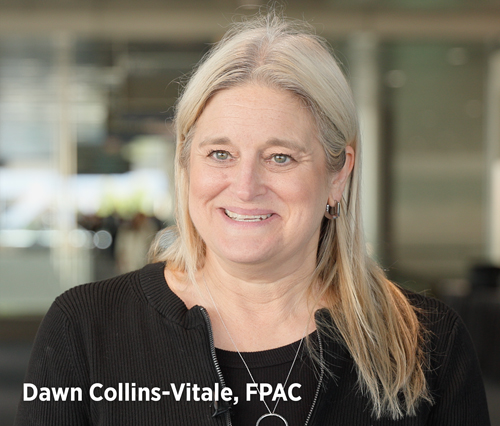
Dawn Collins-Vitale pursued FPAC while changing jobs and industries. During her career, she moved through telecom, banking, healthcare and logistics. She found that the FP&A skills she developed continued to apply across those environments. She specifically points to budgeting, forecasting and P&L responsibilities as reasons FPAC aligned with her work.
Dawn also describes using knowledge gained through certification during monthly financial reviews. Her role is focused heavily on revenue, yet her broader understanding of financial information helps her examine general-ledger activity and have more informed conversations with accounting and leadership about the factors affecting results.
What Are the Benefits of FPAC Certification?
The value will depend on your role and career goals. The evidence from AFP research and FPAC professionals points to several areas where credential holders see value.
Validate your FP&A knowledge
FPAC is built around a job analysis of FP&A responsibilities and requires candidates to pass a two-part examination covering both foundational knowledge and applied FP&A capabilities.
Develop knowledge you can apply at work
96% of credential holders surveyed say FPAC preparation materials are relevant to their jobs.
Strengthen your qualifications for FP&A positions.
96% of finance executives say they are more likely to hire a certified candidate. Hiring managers interviewed by AFP also report giving FPAC candidates additional consideration.
Support career development
FPAC professionals have reported promotions, new opportunities and increased responsibility after earning the credential. Certification alone cannot be isolated as the cause of these outcomes.
Build credibility with colleagues and business leaders
Terry Ackermann says the credential has helped him establish credibility inside and outside his organization, with colleagues relying on his FP&A work and expertise.
Increase earning potential
FPAC holders in Manager FP&A and Director of FP&A/Finance roles report higher average base salaries than non-holders.
How Much Does the FPAC Certification Cost?
Current early-registration FPAC exam fees are:
| FPAC Exam | Optional Prep Platform | Exam + Prep | |
| AFP Member | $1025 | $1095 | $2120 |
| Non-Member | $1420 | $1195 | $2615 |
| Corporate Member* | $825 | $895 | $1720 |
The final-deadline exam fee is $100 higher in each membership category. The non-member application fee includes one year of AFP membership. New-applicant fees cover both parts of the examination.
The Prep Platform is optional.
* If your organization already has assigned you a membership through the corporate membership program
What Is the Cost Versus Value of FPAC?
The financial investment for the exam currently ranges from $1025 to $1,420 with early registration, depending on membership status. Candidates who also purchase the Prep Platform would currently spend between $2,120 and $2,615.
There is also a significant time commitment. Part I includes 140 multiple-choice questions with a scheduled appointment time of three hours. Part II includes 55 task-based simulations and case-analysis questions with a scheduled appointment time of 4.5 hours. Candidates also need time to prepare for both parts.
Compensation data provides one way to put the financial cost into context.
According to the AFP Compensation Survey:
| Position | Average Dollar Difference | Average Base Salary Difference |
| Manager FP&A | +$10,315 | +8% |
| Director FP&A/Finance | +$8,119 | +5% |
These are average reported differences between FPAC holders and non-holders in those positions. They do not mean earning FPAC will result in a specific salary increase. Experience, employer, responsibilities, location and individual performance can all affect compensation.
For someone evaluating the investment, the decision should include the cost of the exam, preparation time, relevance to the person's current work and the importance of FP&A to their longer-term career plans.
Who Should Pursue the FPAC Certification?
FPAC may be particularly relevant if you:
- Plan to build your career in corporate FP&A.
- Already work in FP&A and want formal validation of your knowledge.
- Are moving from accounting or another discipline into FP&A.
- Are pursuing an analyst, manager or finance leadership role that requires broader FP&A capabilities.
- Work across different industries and want a credential focused on transferable FP&A competencies.
- Want structured development in areas such as forecasting, modeling, business partnering, systems and business communication.
Candidates must also meet FPAC education and experience requirements before the credential can be awarded. AFP allows candidates to begin the program before all education and experience criteria have been completed, provided the entrance requirements are met.
Frequently Asked Questions About FPAC Certification
Is FP&A certification worth it?
FP&A certification can be worth the investment for professionals who plan to build a career in financial planning and analysis. Almost 90% of FPAC credential holders surveyed say the certification is valuable to their career, and 96% say FPAC preparation materials are relevant to their jobs. FPAC holders have also reported higher average base salaries in certain finance roles.
What are the benefits of FP&A certification?
FPAC provides formal validation of FP&A knowledge through an examination based on the responsibilities performed by FP&A professionals. Credential holders also report gaining knowledge during preparation, increased career differentiation and help transitioning into FP&A roles.
Does FP&A certification help your career?
FPAC can support career development by giving professionals a recognized way to demonstrate FP&A knowledge. Practitioners interviewed by AFP have described promotions, new roles and increased responsibilities after earning the credential. Individual results vary, and the certification does not guarantee advancement.
Do employers value FPAC certification?
AFP reports that 96% of finance executives are more likely to hire a certified candidate over someone without a certification. FPAC hiring managers interviewed by AFP also say the credential receives additional consideration when they review candidates.
How much does the FPAC exam cost?
Current early-registration fees are $1,025 for AFP Members and $1,420 for non-members. Final-deadline exam fees are $100 higher. If your organization already has assigned you a membership through the corporate membership program, your fee is $895.
The optional FPAC Prep Platform is purchased separately.
Is the FPAC Prep Platform required?
No. The FPAC Prep Platform is optional. AFP currently prices the platform at $1,095 for AFP Members and $1,195 for non-members. If your organization already has assigned you a membership through the corporate membership program, your fee is $895.
What does the FPAC exam cover?
The exam covers Concepts of Business and Finance, Systems and Technology, Business Partnering, Analysis and Projections, Models and Analytics, and Business Communication. Part I focuses on financial acumen. Part II requires candidates to apply FP&A knowledge through simulations and scenario-based problems.
Is FPAC useful if I already work in FP&A?
Yes. Experienced FP&A professionals use the certification to validate knowledge developed on the job and to expand their capabilities into areas they may encounter less frequently in their current positions. Alicia Arnold chose FPAC after years in FP&A because she wanted structured development that could build on her existing experience.
Is FPAC useful if I come from accounting?
FPAC can be relevant for accounting professionals moving into financial planning and analysis. Several FPAC professionals interviewed by AFP, including Bethany Pales, Kevin Christensen and Zach Walters, began with accounting backgrounds before moving further into finance and FP&A.
Is FPAC valuable if I change industries?
FPAC focuses on competencies used across corporate FP&A rather than knowledge specific to one industry. Dawn Collins-Vitale describes applying the same FP&A skill set while working across telecom, banking, healthcare and logistics.
Is FPAC a certification or a certificate?
FPAC is a professional certification. Candidates must satisfy education and experience requirements, meet ethical-conduct requirements and pass the required examinations. Once awarded, the credential is valid for three years. Credential holders must earn and report 45 continuing education credits to recertify.
Is the FPAC exam difficult?
FPAC is designed as a rigorous professional examination. Part I includes 140 multiple-choice questions. Part II includes task-based simulations and case-analysis problems that require candidates to apply FP&A knowledge. Kevin Christensen describes the spreadsheet calculations and scenario-based questions as different from traditional exams and recommends making extensive use of the practice questions and practice tests during preparation.
Should I take the FPAC exam?
FPAC is most relevant when financial planning and analysis is an important part of your current work or long-term career plans. Review the exam specifications and eligibility requirements, consider how closely the competencies align with the work you want to do, and account for both the financial cost and the preparation time before deciding.